A permanent, lawful refuge for the exotic birds Florida cannot afford to lose into the wild.
Florida Exotic Avian Sanctuary & Preservation Institute, Inc. — also known as Florida Avian Institute — is developing a specialized, biosecure bird sanctuary in Ruskin, FL for nonnative softbills, passerines, and other regulated or high-needs exotic birds that are often outside the mission, housing capacity, or technical expertise of traditional parrot-focused rescues.
Our purpose is simple and urgent: provide a responsible surrender and lifetime-care pathway before an overwhelmed owner faces an impossible choice between unsafe release, inadequate placement, or euthanasia. We are building deliberately in the Ruskin–Wimauma area of South Hillsborough County, with facility design, operations, and admissions contingent on all applicable approvals and permits.
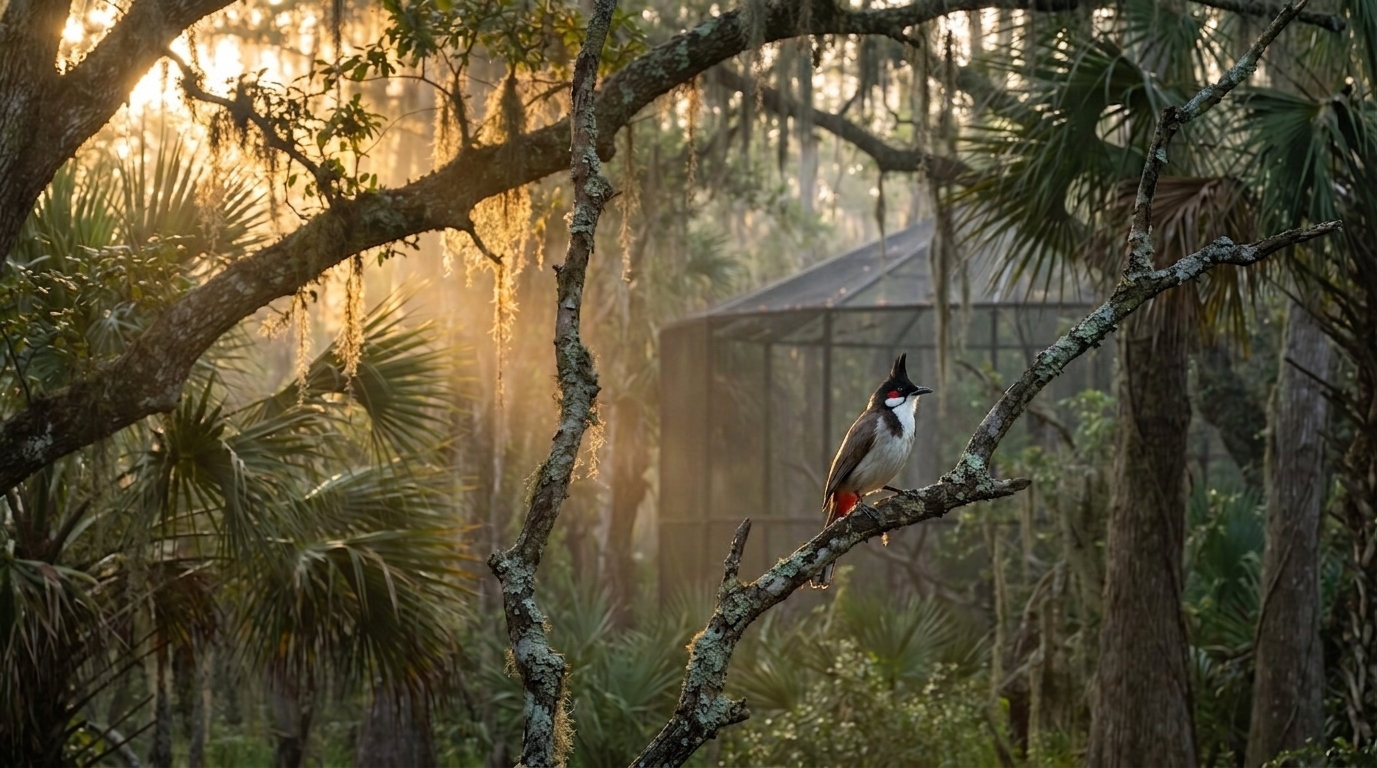
Sanctuary, rehabilitation, and preservation — not a tourist zoo.
Our mission is to provide lifelong, biosecure sanctuary, specialized rehabilitation, and humane preservation for exotic softbills, passerines, and specialized avian species that have nowhere else safe to go. Every bird in our care lives out its life in naturalistic habitat, under veterinary-informed protocols, with no expectation of release, sale, or unapproved breeding.
We are not a roadside attraction, a breeding operation, or a commercial exhibition space. Animal welfare and preventing illegal release into Florida's ecosystem come first, always — that priority will not change as we grow. We are a preservation institute — built to hold a standard of care that outlasts trends, funding cycles, and any single person's involvement.
Sanctuary work and public education are not in conflict, though. Once authorized, we plan to welcome visitors through controlled, scheduled educational programming — not open-ended public access — so people can learn firsthand about avian history, the dynamics of non-native species in Florida, and why prohibited species such as the Red-whiskered Bulbul require strict, lawful management to protect the state's ecosystem.
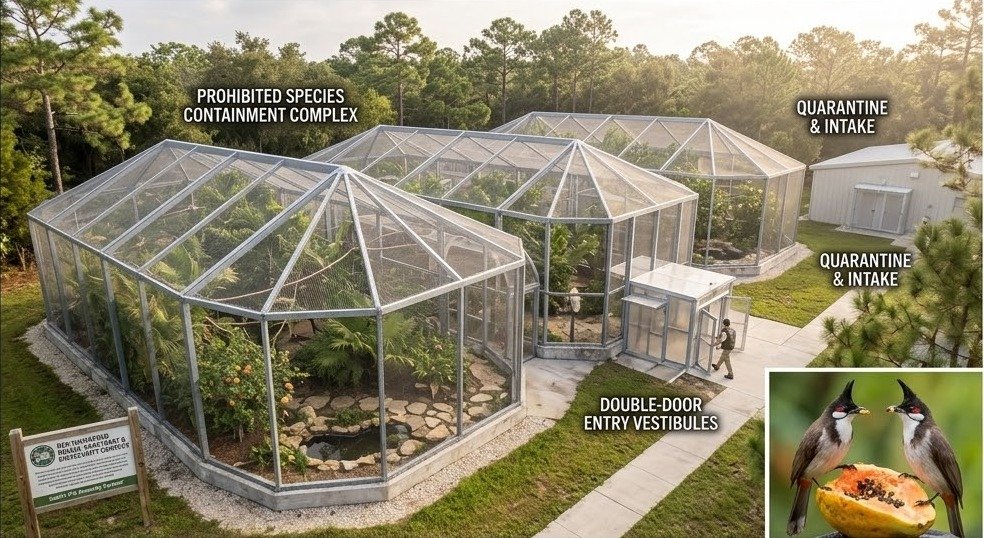
Concept rendering for planning and fundraising purposes. It does not depict an existing facility.
Florida has parrot rescue capacity. Specialized birds need a different kind of care.
Many established avian rescues do essential work for parrots such as macaws, cockatoos, conures, and other hookbills. Yet specialized softbills, passerines, insectivores, fruit-eating birds, and certain regulated nonnative species can require markedly different nutrition, social grouping, disease controls, enclosure design, climate management, and long-term handling protocols.
When an owner can no longer provide appropriate care, a bird may be difficult to place—not because it is disposable, but because an appropriate facility is uncommon. Our Institute was created to address that narrow but consequential gap through species-appropriate planning, permanent-care capacity, and transparent regulatory readiness.
We do not compete with parrot rescues. We complement Florida’s existing animal welfare network by concentrating on birds for which suitable placement may be limited and by directing owners to lawful rehoming options while our own facility is being developed and authorized.
A safe surrender path helps prevent an ecological problem from becoming permanent.
Florida’s climate can allow some nonnative animals to survive outside captivity. An illegal release or escape can place an individual bird at risk while also creating potential pressure on native wildlife, habitats, and agricultural systems. Prevention begins before a bird reaches the outdoors: with secure containment, responsible owner education, and a lawful placement option when private care fails.
Our proposed South Hillsborough sanctuary is designed around that prevention principle. The planned model includes controlled intake, quarantine, species-specific housing, double-door entry systems, escape-prevention procedures, veterinary-informed care, and emergency preparedness appropriate to Florida’s weather risks. No regulated species will be accepted or housed unless and until all applicable authorizations are in place.
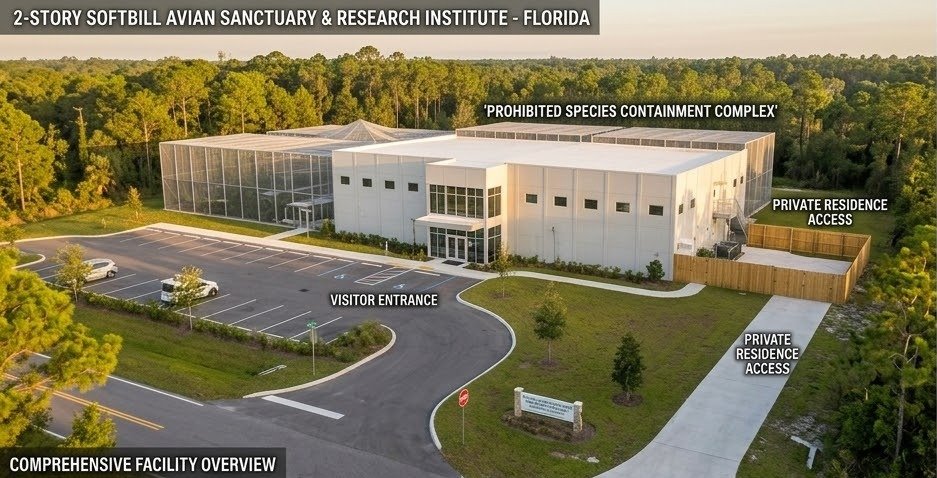
Concept rendering for planning and fundraising purposes. It does not depict an existing facility.
A permanent home in the Ruskin-Riverview corridor.
Our long-term vision is a dedicated 1.5 to 2-acre conservation sanctuary in South Hillsborough County — a landscape of working farms, oak hammocks, and quiet agricultural parcels that still has room for wild things. The site will feature climate-controlled, predator-proof aviaries and native botanical landscaping designed specifically for the species in our care.
- Climate-controlled, predator-proof aviary construction
- Native Florida botanical landscaping for enrichment and shade
- Room to grow into a full-scale preservation campus
Built to earn trust before we ask a bird, a donor, or a regulator to place trust in us.
The Institute is a Florida nonprofit corporation, Sunbiz No. N26000011629, with EIN 42-4597062 and FDACS Solicitation of Contributions Registration No. CH84888. Our federal tax-exempt status under Section 501(c)(3) is pending.
We intend to pursue the applicable approvals, permits, inspections, and operating requirements necessary for our planned activities. FWC approval, permit scope, and species eligibility are determined by the appropriate regulatory authorities. We will not accept, house, exhibit, breed, transfer, or release any animal outside the authority and capacity lawfully available to the Institute.
Need to rehome a nonnative pet now?
Contact the Florida Fish and Wildlife Conservation Commission’s Exotic Pet Amnesty Program for the current official process and available placement options. The Institute is not currently an FWC-approved Amnesty adopter or placement site.
Visit the FWC Exotic Pet Amnesty Program, or call 888-Ive-Got1 (888-483-4681).
Built on a real institutional foundation.
Florida Non-Profit Corporation
Registered with the Florida Division of Corporations (Sunbiz), Document #N26000011629.
Federal 501(c)(3) Status
Tax-exempt determination pending with the IRS under EIN #42-4597062.
FDACS Solicitation Registration
Maintaining active compliance with Florida's Solicitation of Contributions Act.
Support the sanctuary before it opens its gates.
Whether you're ready to donate, volunteer, become a Legacy Partner offering land, or you simply want to help exotic and prohibited bird species get the lawful, permanent home they need — there's a place for you here. Need to rehome a bird right now? See the FWC Amnesty Program information below — we are not yet an approved placement site.